

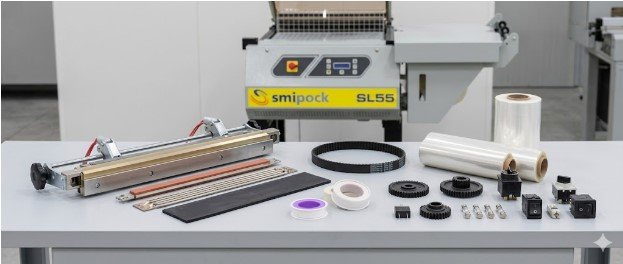
Packaging equipment needs consistent performance to keep production moving on time. When sealing, cutting, or film handling issues begin, replacement Smipack SL55 parts can help restore machine function before small wear problems cause major downtime. For businesses using shrink wrapping systems, dependable parts support smoother operation, cleaner seals, and better package presentation.
The SL55 is commonly used in shrink packaging environments where products must be sealed quickly and neatly. Over time, parts such as seal bars, blades, wires, belts, springs, and film-handling components may wear down. Replacing them at the right time helps protect output quality.
Why do packaging machine parts matter?
Every packaging machine depends on many moving and heated components working together. If one part becomes worn, loose, damaged, or misaligned, the entire wrapping process can suffer. This may lead to poor seals, uneven cuts, film waste, jams, or slower production.
Reliable replacement parts help keep the machine operating as intended. They also reduce the risk of unexpected stoppages during busy production schedules. For companies that package products daily, even a short delay can affect orders, labour time, and customer satisfaction.
What signs show that parts may need replacement?
A packaging machine often gives warning signs before a part fails completely. Operators may notice weak seals, burnt film, inconsistent cuts, unusual noises, film dragging, or repeated jams. These issues should not be ignored.
Common signs include:
- Seals are not closing evenly
- Film tears during wrapping
- Packages look loose or wrinkled
- The machine needs frequent adjustments
- Cutting is uneven or incomplete
- Production speed has slowed
- Heat settings no longer perform as expected
- Operators notice visible wear on components
Checking these signs early can prevent bigger repair needs.
How does the seal bar affect packaging quality?
The seal bar is one of the most important parts in a shrink wrapping machine. It helps create the sealed edge that holds the film around the product. If the seal bar is worn or damaged, the package may not close properly.
Why should seal quality be checked often?
Poor seal quality can affect both protection and appearance. A weak seal may open during handling, shipping, or storage. A messy seal can also make the product look less professional on shelves or in customer deliveries.
Regular inspection helps operators catch wear before packaging quality drops. If the machine produces repeated weak seals, a replacement bar or related component may be needed.
Why should businesses use the right replacement parts?
Using the correct part matters because packaging machines are designed with specific dimensions, materials, and tolerances. A mismatched part may not fit properly or may cause performance issues. It can also lead to unnecessary machine strain.
Correct replacement parts help maintain sealing accuracy, cutting consistency, and safe operation. They also make maintenance easier because the part is designed for the equipment model. This helps reduce trial-and-error repairs.
How can maintenance reduce downtime?
Preventive maintenance helps businesses avoid surprise failures. Instead of waiting for a part to break during production, teams can inspect and replace worn components on a planned schedule. This keeps packaging lines more predictable.
What should a maintenance routine include?
A practical routine may include checking seal bars, blades, belts, wires, springs, rollers, sensors, and film paths. Operators should also clean buildup from sealing areas and remove film debris. Keeping a record of replacements helps teams know when parts may need attention again.
Regular maintenance can also improve safety. Machines that are clean, aligned, and properly fitted with replacement parts are easier to operate and monitor.
How do quality parts support long-term savings?
Low-cost parts may seem attractive, but poor fit or weak materials can create repeat problems. If a part fails quickly, the business may pay more through downtime, wasted film, rejected products, and extra labour. Quality parts support better value over time.
Reliable components can help maintain machine speed and output consistency. They also help protect other machine parts from stress caused by poor alignment or uneven operation. For busy packaging teams, durability matters.
What should buyers check before ordering?
Before ordering, buyers should confirm the machine model, part number, dimensions, and compatibility. They should also check whether the part is for the sealing system, cutting system, film feed, or another section of the machine. Careful ordering helps avoid delays.
Useful checks include:
- Machine make and model
- Existing part number
- Product description
- Required quantity
- Installation area
- Current issue or symptom
- Compatibility details
- Shipping timeline
These steps make replacement faster and more accurate.
Final Thoughts
Keeping packaging equipment in good condition starts with using the right parts at the right time. Businesses that depend on shrink wrapping should monitor wear, inspect sealing quality, and replace key components before failures disrupt production. When teams need dependable Smipack SL55 parts, choosing the correct part machine component in the middle of routine maintenance can support cleaner seals, fewer interruptions, and steadier packaging performance.