

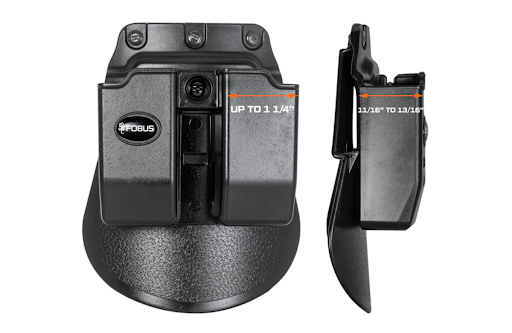
In the world of tactical gear, few items have undergone as fascinating a transformation as magazine carrying pouches. Once strictly associated with military and law enforcement applications, these compact storage solutions have become an essential component of the everyday carry (EDC) toolkit. From rugged battlefield designs to sleek, civilian-ready configurations, the evolution of magazine pouches reflects the broader shifts in how society views personal preparedness, tactical readiness, and the practical utility of gear.
From the Trenches: The Origins of Magazine Pouches
The earliest forms of magazine pouches can be traced back to the early 20th century, when semi-automatic firearms became more widespread in military use. Soldiers needed a secure and accessible way to carry extra ammunition in the field. These original pouches were made of canvas or leather and often attached to belts or load-bearing vests. Their function was purely utilitarian: to provide quick access to magazines under high-stress conditions without compromising mobility or safety.
By World War II, the design of magazine pouches had already become more sophisticated. Nations began issuing standardized pouches for popular rifles like the M1 Garand and the STG 44. These magazine carriers were not only stronger but also better tailored to specific calibers and magazine sizes, setting the foundation for the modular designs we see today.
Innovation Through Conflict and Technology
The Tactical Boom and Material Advancements
The late 20th century, particularly during the Vietnam War and subsequent conflicts, brought rapid advancements in materials and tactical theory. Nylon replaced canvas, Velcro and plastic buckles took over from buttons and straps, and the idea of modularity became central to tactical loadouts.
This period also marked the birth of the magazine holster concept—a more rigid, form-fitting variation of the traditional pouch designed for speed reloads and precise retention. These innovations weren’t just about aesthetics or comfort; they were driven by hard-earned combat experience and the evolving needs of modern warfare.
As tactical gear manufacturers sought to optimize every inch of a soldier’s loadout, magazine pouches became lighter, more durable, and highly customizable. MOLLE (Modular Lightweight Load-carrying Equipment) systems allowed users to attach pouches wherever they found most convenient, enhancing both versatility and personal preference in gear setup.
Civilian Adoption and the Rise of Everyday Carry
From Range to Real Life
In recent years, the tactical gear landscape has shifted once again. Magazine pouches, once exclusive to professionals in uniform, are now part of the civilian EDC ecosystem. As more civilians engage in recreational shooting, self-defense training, and emergency preparedness, the demand for practical yet low-profile magazine storage has skyrocketed.
Today’s civilian-friendly pouches prioritize concealment and comfort just as much as accessibility. Slim-profile designs that fit discreetly under clothing, hybrid materials that blend durability with flexibility, and attachment options that integrate with civilian-style belts and backpacks have become the norm.
Moreover, the everyday user doesn’t need a full tactical vest to carry extra magazines. Many opt for a minimalist magazine carrier that clips onto a belt or slips into a pocket, offering a balance between tactical functionality and civilian appropriateness.
Conclusion
What began as a battlefield necessity has evolved into a personal security staple. Magazine pouches have transcended their military origins to become a symbol of preparedness and practical efficiency. Whether on the battlefield, at the shooting range, or in an everyday carry setup, these compact accessories continue to adapt to the needs of their users.
As firearm technology advances and civilian interest in tactical training grows, we can expect further innovation in magazine pouch design. Smart materials, integrated RFID tracking, or modular systems that sync with digital gear may soon redefine how we think about carrying ammo.
One thing remains certain: magazine pouches will continue to evolve, just as the people who rely on them have—from soldiers in combat zones to civilians preparing for the unexpected.