

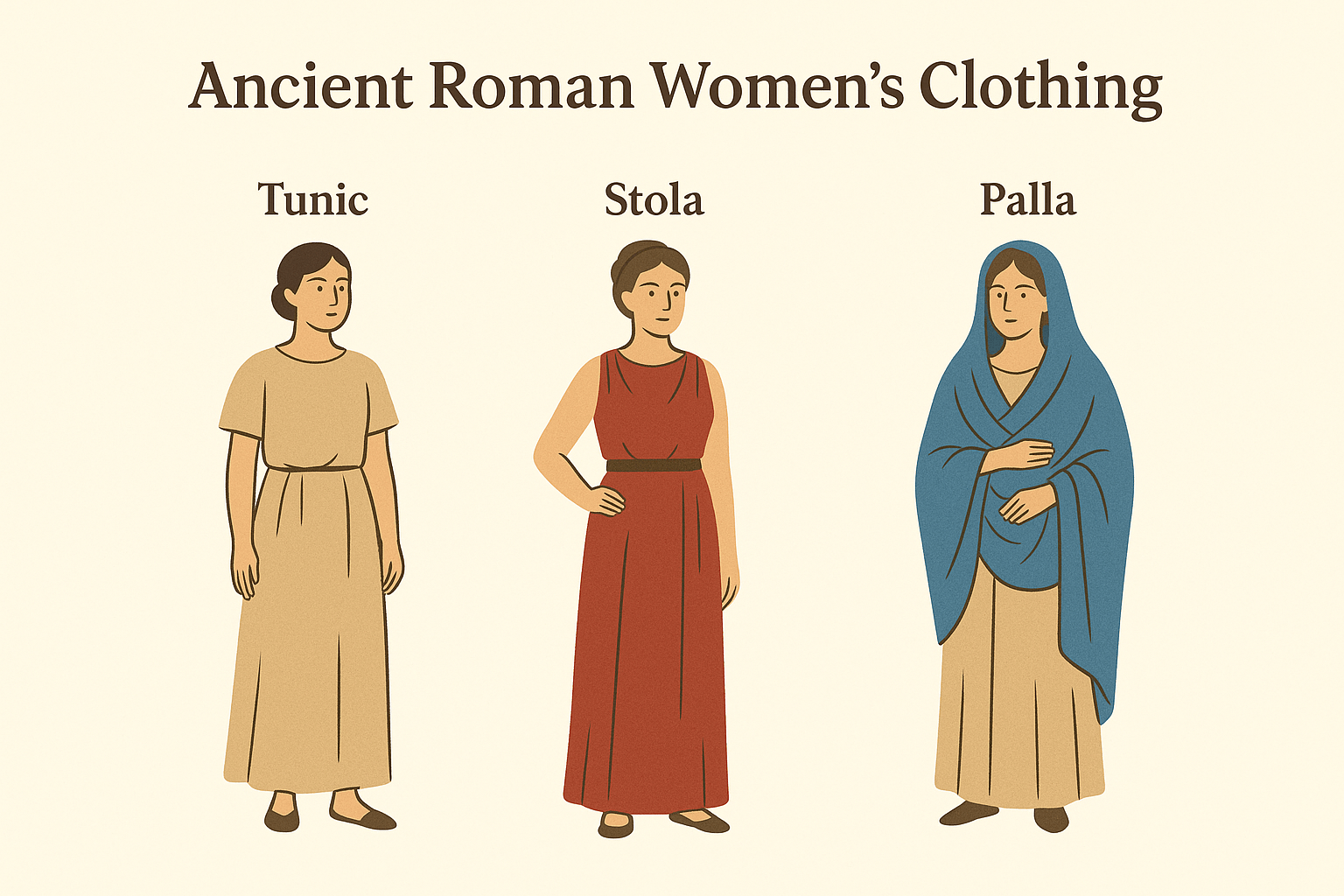
Ancient Rome was one of the most influential civilizations in world history, and Roman women’s clothing played a key role in expressing not only personal style but also social status, cultural values, and civic identity. Unlike today’s fashion, garments in ancient Rome were deeply tied to class, gender norms, and ideals of virtue and respectability.
The Foundation: The Tunic
At the heart of every Roman woman’s wardrobe was the tunic — a simple, long garment made of wool or linen. Tunics were practical and comfortable, usually reaching down to the ankles and worn as everyday attire by women of all classes. Wealthy women might have tunics made from finer fabrics and decorated with subtle trims, while lower-class women and slaves wore rougher, undyed versions suited to work and daily life.
The Stola: A Mark of Respectability
What truly distinguished Roman women from men and indicated marital status was the stola. This long, sleeveless robe was worn over the tunic and was a lasting symbol of marriage and respectability. In Roman society, a married woman — especially one of higher social rank — wore a stola to demonstrate her adherence to societal ideals of modesty, fidelity, and domestic virtue. The garment’s length and structure projected dignity, and in the early Republic it was strictly associated with women of standing. Over time, its use expanded to include some lower-class matrons as well.
The Palla: Outer Elegance and Practicality
When leaving the house, Roman women commonly added a palla, a large rectangular shawl that beautifully complemented the tunic and stola. The palla could be draped over the shoulders or drawn up over the head as a modest covering in public, reflecting both elegance and practicality. Wealthier women often selected pallas made from finer fabrics and more vibrant colors, whereas simpler versions were typical among the lower classes.
Symbols of Class and Identity
Roman clothing did more than cover the body — it communicated a woman’s place in society. Wearing a stola marked a woman as a matrona (a married Roman citizen), linking her attire with ideals of loyalty and domestic virtue. In contrast, women who did not wear the stola — such as unmarried girls, slaves, or women in disrepute — typically wore simple tunics without the added layers of status clothing. This distinction highlighted the powerful role clothing played in reinforcing social hierarchy.
Underlayers and Accessories
Roman women also wore undergarments such as a strophium, similar to a modern breast-band or primitive bra, for support. Footwear ranged from simple sandals to closed leather shoes, depending on status and occasion. Jewelry, hairstyles, and cosmetics were additional ways to express personal style and wealth — ornate pieces and elaborate hairdos were common among elite women and reflected broader Roman tastes for adornment.
Why Roman Women’s Clothing Matters Today
Ancient Roman women’s clothing tells us much about daily life, gender roles, and cultural values in one of history’s most influential civilizations. Garments like the tunic, stola, and palla were not only practical but deeply symbolic, conveying messages about virtue, class, and identity that transcend time.
Understanding these styles helps modern readers appreciate how clothing functioned in ancient societies as both personal expression and visual language — shaping perceptions in the public eye long before fashion magazines and runways existed.
For More Info Visit:- marketingbiznews.com
 David Martinez