

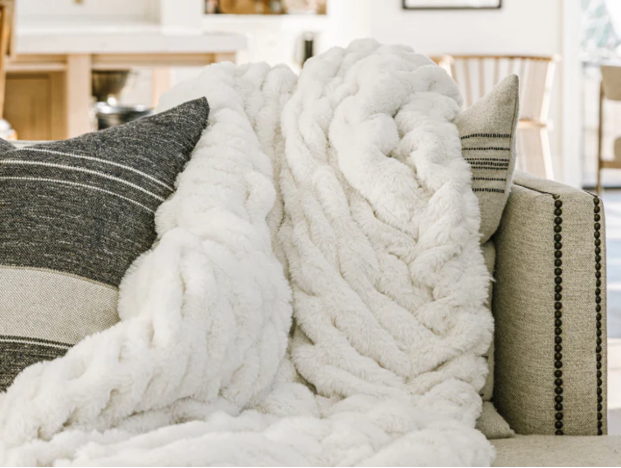
Few home textiles carry the quiet versatility of a well-chosen blanket, and fewer still do it as effortlessly as one in white. Clean, calming, and endlessly adaptable, a white blanket works across bedroom styles, living room aesthetics, and seasonal needs without ever feeling out of place. White blankets have become a staple of modern interior design precisely because they complement rather than compete — enhancing a space without dominating it. Whether draped over a linen sofa, folded at the foot of a bed, or wrapped around your shoulders on a cold evening, the right blanket delivers both physical comfort and visual harmony. Understanding what makes one truly exceptional starts with the materials.
Why White Works So Well in Modern Home Interiors?
Color trends in home interiors come and go with remarkable speed, but white has maintained its relevance across decades of shifting design philosophies. The reason is straightforward — white reflects light, makes spaces feel larger and more open, and serves as a neutral anchor that allows other design elements to breathe. In contemporary interiors defined by clean lines, natural materials, and restrained color palettes, a white textile adds softness without introducing visual noise. White blankets layer particularly well with natural textures like wood, linen, rattan, and stone, creating the kind of organic, collected aesthetic that dominates modern home design. Whether your interior leans toward Scandinavian minimalism, coastal calm, or warm transitional styling, white integrates naturally into every approach.
Weave Structures and Texture — The Details That Matter
Beyond raw material, the weave structure of a blanket significantly influences its tactile character and visual appeal. Waffle weaves create a distinctive grid pattern that adds dimensional texture to an otherwise simple piece, catching light in ways that make the surface feel dynamic and interesting. Cable knit constructions carry a heritage warmth and hand-crafted quality that suits relaxed, cozy interior settings. Tightly woven twill and herringbone structures produce a sleeker, more tailored appearance suited to formal bedroom or living room arrangements. Loose open-weave cotton throws offer lightness and an effortlessly casual aesthetic. Understanding these structural differences allows homeowners to select white blankets that complement not just the color palette of a room but its overall texture story as well.
Caring for White Blankets to Maintain Their Appearance Over Time
White textiles require slightly more attentive care than their darker counterparts, but maintaining their appearance over time is entirely manageable with the right approach. Pre-treating any stains promptly before they set is the single most effective practice for preserving a clean, bright appearance. Washing at the temperature recommended for the specific fiber — cold for wool and cashmere, warm for cotton — prevents shrinkage and fiber degradation that shortens a blanket’s usable life.
Using a gentle, color-safe detergent formulated for whites helps maintain brightness without the harshness that bleach-based products can introduce over repeated wash cycles. Drying flat or on a low-heat setting preserves shape and prevents pilling that mechanical tumbling can cause in knitted and woven fabrics. Avoid overloading the washing machine, as proper water circulation is essential for a thorough and even clean. Storing blankets in a cool, dry space away from direct sunlight helps prevent yellowing and fabric weakening over time.
Conclusion
A well-chosen blanket does more than provide warmth — it contributes meaningfully to the atmosphere and comfort of the spaces we live in every day. White as a color choice brings lasting versatility and a quiet sophistication that seasonal trends rarely disrupt. For those who want to take that comfort and aesthetic to its highest expression, investing in luxury blankets crafted from premium natural fibers delivers a tactile and visual quality that genuinely elevates every room they inhabit, season after season.
 David Martinez