

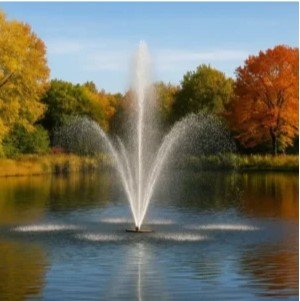
Small ponds often benefit from fountain installations even more than their larger counterparts do. Where a large pond enjoys natural circulation from wind and inlet streams, a small pond can easily become stagnant without some form of active water movement. A properly sized floating fountain solves that problem while adding visual interest that transforms an unremarkable small pond into a genuine focal point. Choosing floating fountains for small ponds specifically, rather than trying to fit oversized equipment into a small water body, produces dramatically better results and significantly longer equipment life over time.
Defining ‘Small’ in Pond Terms
Fountain sizing guidelines categorize ponds by surface area. Small ponds generally fall under a quarter acre and often well below that in residential settings. Typical characteristics include surface area under ten thousand square feet, depth between three and eight feet at the deepest point, residential or small commercial settings, limited natural circulation from wind or streams, and the thermal stratification and algae issues that follow from stagnant water. Owners shopping for floating fountains for small ponds should start by measuring the water body honestly rather than guessing, because guesses almost always run larger than reality.
Right-Sizing the Fountain
A one-third horsepower fountain works well for very small ponds around one-eighth acre or less, producing modest spray heights proportional to the water body. A one-half horsepower fountain suits slightly larger small ponds up to roughly one-quarter acre, with taller spray for stronger visual impact and better aeration. Generally, maximum spray height should be roughly one-quarter to one-third of the pond’s shortest dimension. Taller sprays in small ponds look out of proportion and create excessive mist that wets surrounding landscaping and outdoor furniture in ways homeowners quickly come to resent.
Aesthetic Considerations
Small ponds become dominated visually by whatever features they contain. A well-chosen fountain becomes the focal point and defines the pond’s character. An oversized fountain or mismatched spray pattern, however, can make the pond look smaller and feel cluttered in ways that are hard to undo. Floating fountains for small ponds work best when the spray pattern complements rather than overpowers the pond’s size. Tulip, lotus, and low crown patterns often work beautifully in small ponds where tall geysers would overwhelm the space and fight the surrounding landscape for attention.
Water Quality Benefits
Small ponds without active aeration often experience serious water quality problems that fountains dramatically reduce. Stagnation allows algae to bloom rapidly. Thermal stratification creates oxygen-poor bottom layers that stress fish. Mosquitoes breed in still water. Floating debris and surface films accumulate. Low dissolved oxygen stresses fish populations. Anaerobic decomposition creates odor problems. Winter ice buildup can become concerning. Adding fountain circulation addresses most of these issues simultaneously through continuous circulation, surface aeration, and mechanical disruption of the water column throughout the season.
Installation in Tight Spaces
Small pond installation has its own specific challenges. Limited access often means carrying equipment to the pond edge by hand rather than driving to it. Power supply may need to be extended through existing landscape features. Anchoring options are limited when the pond has an irregular shape or soft banks that do not hold standard anchor types reliably. Working with experienced installers who have handled floating fountains for small ponds specifically produces cleaner, more reliable installations than contractors accustomed only to large commercial water features. Most installations can be completed in a single day.
Power Supply and Safety
Small pond electrical work deserves the same safety attention as any larger water feature. GFCI protection on the fountain circuit is mandatory. Conduit routing should protect cables from mower damage and landscape maintenance equipment. Power outlets need to sit within cable reach without requiring extension cords that create their own safety concerns. A licensed electrician handling the initial electrical infrastructure is almost always worth the investment, both for safety itself and for insurance coverage protection in the event of any future incident near the water.
Maintenance Scaled to the Pond
Floating fountains for small ponds need less overall maintenance than large commercial installations but still require consistent attention to perform reliably. Clean intake screens more frequently in small ponds where debris concentrates quickly due to the limited water volume. Remove fountains before ice forms in freezing climates to protect pumps and floats. Inspect cables and anchor points monthly during the active season. Watch for performance changes that may indicate pump wear before complete failure. These routines take only minutes but prevent the expensive mid-season failures that leave small ponds without circulation during the hottest months.
Adding Lighting
Small ponds especially benefit from coordinated fountain lighting because the entire feature is visible from most viewing angles on the property. A few well-placed LED fixtures transform the fountain into a nighttime focal point visible from patios, windows, and outdoor living areas throughout the home. Quality LED kits integrate with existing fountain installations easily and dramatically increase the hours per day that the pond is actively enjoyed rather than simply existing as a daytime backdrop.
Final Thoughts
Property owners evaluating a 1/3 HP pond fountain for a truly small water body, or stepping up to a larger unit for a slightly bigger pond, will find that working with a specialist supplier who understands small pond dynamics ensures the fountain delivers the visual impact and water quality benefits the setting actually needs.
 Sally
Sally  David Martinez