

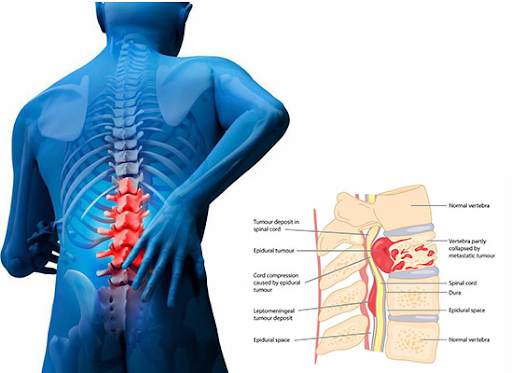
Spinal cord tumours are uncommon growths that develop within or around the spinal cord and spinal canal. Depending on their size and location, these tumours may affect movement, sensation, coordination, and nerve function. Early diagnosis and timely medical care are important for reducing complications and improving recovery outcomes.
In recent years, advances in imaging systems, surgical precision, and specialised neurosurgical care have improved spinal cord tumour treatment in India. Modern treatment methods now focus on safer tumour removal, preservation of nerve function, and improved post-surgical recovery for patients with spinal tumours.
Understanding Spinal Cord Tumours and Surgical Need
Spinal cord tumours may be benign or malignant and can develop either inside the spinal cord or in nearby tissues. Common symptoms include persistent back pain, numbness, muscle weakness, balance problems, and difficulty walking, depending on the tumour’s size and exact location.
Surgery is often recommended when the tumour affects spinal stability or compresses the spinal cord or nearby nerves. MRI scans and neurological assessments help specialists understand tumour position and prepare an appropriate surgical plan before beginning treatment for spinal cord tumours.
Advances in Imaging and Surgical Planning
Modern MRI and CT imaging systems provide detailed views of spinal tumours, surrounding nerves and nearby spinal structures. These imaging methods help doctors determine tumour size, location, and involvement of nearby spinal structures before surgery on the affected spinal region.
Advanced surgical planning systems also support safer procedures by helping surgeons prepare accurate treatment plans. Three-dimensional imaging and digital mapping reduce unnecessary disturbance to healthy tissues and improve surgical precision during spinal tumour operations in specialised neurosurgical centres.
Microsurgical Techniques in Spinal Tumour Surgery
Microsurgical techniques have improved the precision of spinal tumour surgery in many specialised hospitals across India. Surgeons use operating microscopes and specialised instruments to perform delicate procedures while carefully protecting nearby spinal nerves and surrounding healthy tissues.
These techniques are particularly useful when tumours are located close to sensitive nerves or blood vessels. Better visibility during surgery supports safer tumour removal and may help reduce complications while preserving important neurological functions after the procedure.
Minimally Invasive Approaches in Spine Surgery
Minimally invasive spine surgery involves smaller incisions and reduced disruption to surrounding muscles and tissues. This approach is increasingly used for selected spinal tumour cases where tumour size and location allow safe, less invasive surgical access.
Compared to conventional open surgery, minimally invasive procedures may reduce blood loss and shorten hospital stay. Some patients also experience faster recovery and less post-surgical discomfort following carefully planned minimally invasive spinal tumour surgery.
Intraoperative Neuromonitoring During Surgery
Intraoperative neuromonitoring allows specialists to monitor spinal cord and nerve function during tumour surgery. Electrical signals from the nerves are monitored in real time to detect changes that may occur during the surgical removal of tumour tissue.
This monitoring method helps surgeons respond quickly if nerve activity changes during the procedure. It is especially useful in complex spinal surgeries, where preserving movement, sensation, and neurological function remains important throughout tumour removal.
Role of Navigation Systems and Robotic Support
Modern navigation systems provide real-time guidance during spinal surgery using detailed imaging information. These systems help surgeons identify precise treatment areas and improve surgical accuracy while operating in delicate regions near important spinal nerves and tissues.
Some specialised centres in India, including advanced neurosurgical hospitals such as BLK-Max Super Speciality Hospital in Delhi, also use robotic assistance during selected spinal procedures. Robotic support may improve precision during certain stages of surgery and assist surgeons while operating in complex spinal areas.
Rehabilitation and Post-Surgical Recovery
Recovery after spinal cord tumour surgery often requires continued rehabilitation and regular follow-up care. Supportive recovery programmes help patients regain movement, improve physical function, and adjust more comfortably to daily activities after undergoing spinal surgery.
Some important aspects of post-surgical rehabilitation are as follows:
- Physiotherapy Support: Helps improve muscle strength, movement, and balance during recovery.
- Pain Management: Supports patient comfort under medical supervision after surgery.
- Mobility Training: Assists patients in regaining confidence while performing daily activities.
- Neurological Assessments: Helps doctors monitor recovery progress during follow-up visits.
- Multidisciplinary Care: Involves coordination between neurosurgeons, rehabilitation specialists, and physiotherapists.
These rehabilitation measures support long-term recovery and help patients gradually improve mobility, coordination, and independence after surgery. Continued follow-up care also helps doctors monitor recovery progress and address neurological concerns when required.
Conclusion
Advances in spinal cord tumour surgery have improved the safety and effectiveness of treatment available to patients in India. Improvements in imaging, microsurgical techniques, minimally invasive procedures, and intraoperative monitoring have enabled better surgical precision and improved recovery outcomes.
Today, spinal cord tumour treatment in India continues to advance, driven by specialised medical expertise and improved surgical technologies. Early diagnosis, careful surgical planning, and guided rehabilitation remain important factors in helping patients receive timely and appropriate care for spinal cord tumours.
For more information, visit: marketingbiznews.com