

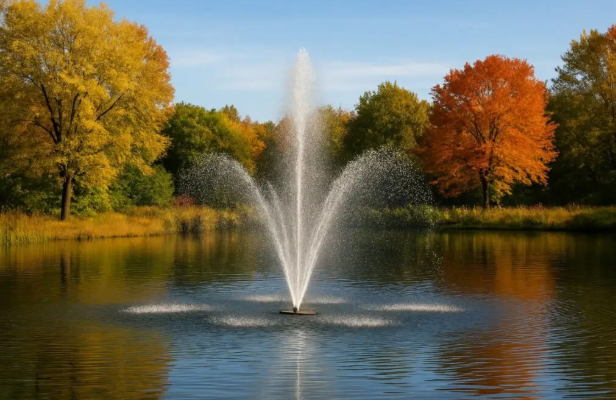
Water features have become an important part of modern landscape design, not only for aesthetic appeal but also for ecological balance. A floating pond fountain is a self-contained system that sits on the water surface and circulates water through a pump to create decorative spray patterns while improving oxygen levels in the pond.
In many residential and commercial water bodies, a floating fountain is used to enhance water movement, reduce stagnation, and support aquatic health. These systems are especially useful in ponds where natural circulation is limited.
How Floating Pond Fountain Technology Works?
A floating pond fountain operates through a motorized pump that draws water from the pond and pushes it upward through specially designed nozzles. The water is then sprayed into the air and falls back into the pond, creating continuous circulation.
This process improves surface aeration, which helps increase dissolved oxygen levels. Studies and industry guides show that surface fountains primarily affect the upper water column, making them ideal for shallow to medium-depth ponds where oxygen exchange is needed at the surface level.
The floating design allows the unit to remain stable while adjusting to water level changes, making installation and maintenance easier compared to fixed systems.
Importance of Floating Pond Fountain Systems
The floating fountain is one of the most commonly used configurations for residential and medium-sized ponds. Horsepower (HP) determines how much water a pump can move, which directly affects spray height and circulation strength.
A floating fountain is typically suitable for ponds ranging from roughly a quarter to half an acre, depending on design and flow rate. It provides a balance between energy efficiency and strong water movement, making it a practical choice for many property owners.
These systems are capable of producing noticeable spray patterns while also contributing to improved water quality by reducing stagnation.
Benefits of Floating Fountain Systems
A properly sized floating pond fountain offers multiple functional benefits beyond visual appeal.
One of the primary advantages is improved oxygen transfer. As water is sprayed into the air, it absorbs oxygen before returning to the pond. This helps support fish, beneficial bacteria, and aquatic plant life.
Another important benefit is algae control. By keeping water in motion, fountains reduce conditions that encourage excessive algae growth. This also helps prevent foul odors caused by stagnant water.
In addition, a floating fountain can assist with surface temperature regulation by promoting circulation, which is especially useful during warmer months when oxygen levels naturally decrease.
Sizing and Performance Considerations
Choosing the correct horsepower is essential for effective performance. Industry guidelines suggest that pond size and surface area are the primary factors when selecting fountain power.
A floating fountain generally produces sufficient flow for mid-sized ponds and can generate strong spray patterns depending on nozzle design. However, deeper ponds may require additional aeration systems since fountains primarily impact surface-level oxygen exchange.
Other factors that influence performance include wind conditions, pond shape, and desired spray height. Irregular pond layouts may require strategically positioned units to avoid stagnant zones.
Maintenance and Operational Efficiency
Regular maintenance ensures the long-term performance of a floating fountain system. This includes cleaning intake screens, checking the pump for debris, and inspecting electrical connections.
Because these systems operate continuously in water, durability is a key design factor. Most modern units are built with corrosion-resistant materials and protective housings to extend operational life.
Conclusion
A pond fountain is both a functional and aesthetic addition to modern water management systems. The 1 2 hp floating pond fountain remains a widely used solution for medium-sized ponds due to its balance of efficiency and performance. It enhances water movement, supports aquatic life, and improves overall pond health through consistent circulation.
 David Martinez