

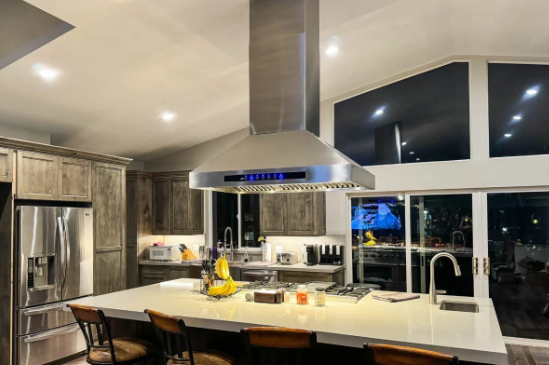
Modern kitchens generate far more airborne contaminants than many homeowners realise, especially in open-plan homes where cooking areas connect directly to living spaces. From fine grease particles to lingering smells and heavy steam, poor ventilation can quickly affect comfort and cleanliness. In the middle of effective kitchen air management, professional range hoods play a vital role in capturing and removing smoke, odours, and grease before they spread throughout the home. Understanding how these systems work helps homeowners appreciate why commercial-grade performance is increasingly preferred in modern residential kitchens.
Capturing Smoke at the Source
One of the main reasons homeowners choose professional range hoods is their ability to capture smoke immediately as it rises from the cooking surface. High-powered motors and precisely designed intake zones allow the hood to draw smoke upward before it has time to disperse into the room.
Unlike basic residential models, professional range hoods are engineered with larger capture areas and stronger airflow capacity, allowing them to handle high-heat cooking methods such as grilling, searing, and wok cooking without losing extraction efficiency.
This early capture reduces haze, prevents odours from travelling into nearby rooms, and keeps the cooking space clearer and more comfortable.
Removing Odors Through Advanced Airflow Design
Odour control depends heavily on how efficiently air is moved through the hood system. Professional range hoods use optimised airflow pathways that pull cooking vapours directly into the filtration and ducting system rather than allowing them to drift across the kitchen.
Because of their stronger extraction capability, professional range hoods are particularly effective in open-plan layouts where smells can easily travel into dining and lounge areas. The faster contaminated air is removed from the cooking zone, the less opportunity odours have to settle into furnishings, curtains, and soft surfaces.
Trapping Grease with High-Performance Filters
Airborne grease is one of the most damaging by-products of everyday cooking. Over time, it settles on cabinets, walls, ceilings, and appliances. Professional range hoods use heavy-duty baffle or multi-layer filters designed to trap grease particles before air moves into the duct system.
The filter structure forces airflow to change direction, causing grease droplets to separate from the air stream and collect safely inside the filter assembly. With professional range hoods, this process significantly reduces grease buildup in the kitchen and protects internal ducting from contamination.
Supporting Consistent Extraction During High-Heat Cooking
High-output cooktops and multiple burners generate intense heat and dense vapour clouds. Professional range hoods are built to maintain stable extraction performance even under heavy cooking loads.
By combining powerful motors with balanced airflow distribution, professional range hoods prevent pressure loss and ensure that smoke and steam are continuously removed without fluctuating performance. This consistency is essential for kitchens where cooking is frequent and intensive.
Preventing Moisture and Condensation Buildup
Steam released during boiling, simmering, and steaming increases humidity around cooking areas. Without effective ventilation, moisture can settle on nearby surfaces and encourage long-term damage. Professional range hoods draw moist air out of the kitchen quickly, reducing condensation on cabinets, splashbacks, and ceilings.
By controlling humidity levels, professional range hoods help protect finishes and prevent lingering damp odours that often develop in poorly ventilated kitchens.
Improving Overall Indoor Air Quality
Cooking produces fine airborne particles that are invisible but still affect indoor air quality. Professional range hoods remove these particles before they circulate through the home, improving breathing comfort and reducing long-term exposure to airborne cooking by-products.
In homes where cooking is a daily activity, professional range hoods contribute to a noticeably fresher indoor environment by limiting the accumulation of airborne contaminants and maintaining cleaner airflow throughout connected living spaces.
Conclusion
Effective kitchen ventilation relies on strong airflow, reliable filtration, and consistent extraction that removes smoke, odours, and grease before they spread throughout the home. Choosing the right 30 exhaust hood helps ensure the ventilation system can support powerful professional-grade performance while fitting seamlessly into modern kitchen layouts. By investing in advanced ventilation technology, homeowners can maintain cleaner air, protect kitchen surfaces, and enjoy a more comfortable and hygienic cooking environment every day.
 David Martinez