

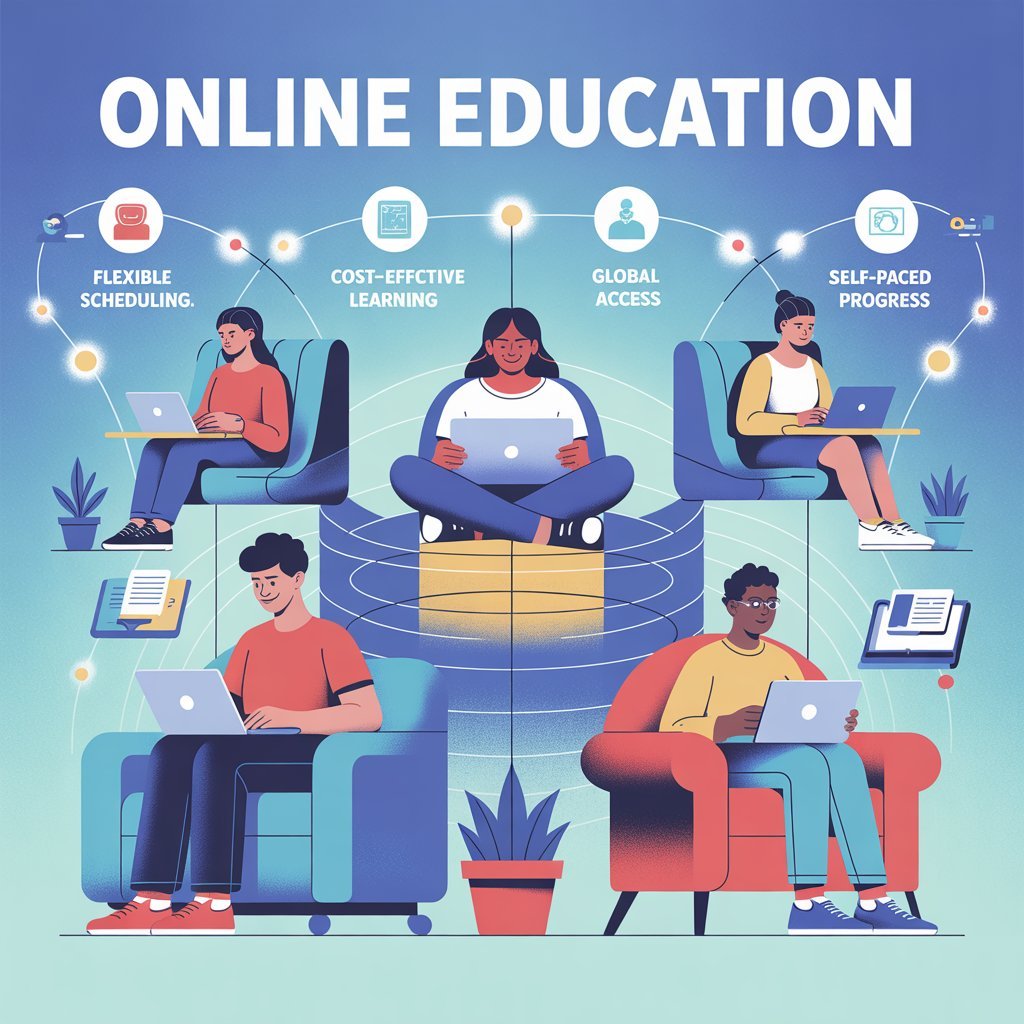
In today’s fast-paced world, online education is no longer just a trend — it’s becoming a core way people learn. Whether you’re a student, a working professional, or someone looking to pick up a new skill, e-learning offers huge advantages. In this post, we’ll dive into the 10 powerful benefits of online education, and why it’s increasingly the future of learning.
1. Flexibility in Learning
One of the biggest draws of online education is flexibility. You don’t have to be physically present in a classroom — you can study from anywhere, anytime. This means you can balance studies with work, family, or other responsibilities. This flexibility helps learners shape their schedule around what works best for them.
2. Cost-Effective
Traditional education often comes with high costs: commuting, hostel, printed books, etc. Online education can significantly reduce these expenses. You can save on travel, accommodation, and often have access to digital resources and e-books. Some online courses are much cheaper than in-person classes, making quality education more accessible.
3. Wide Range of Courses
From academic subjects to niche specializations, online education offers a diverse course catalog. You can learn anything — programming, creative writing, digital marketing, or even soft skills like communication and leadership. This variety means you can pick exactly what you want to learn, not just what’s offered in local institutions.
4. Self-Paced Learning
Not everyone learns at the same speed — and online education respects that. Many courses let you move at your own pace. You can rewind video lectures, re-read modules, pause to reflect, or accelerate through familiar material. This personalized pace helps improve understanding and retention.
5. Accessibility & Inclusivity
Online education breaks down geographical and physical barriers. People from remote areas, or those who have mobility issues, can access high-quality education through a laptop or phone. This inclusivity makes education more equitable.
6. Enhanced Digital Skills
When you learn online, you’re also improving your digital literacy. You become more comfortable using digital platforms, software tools, communication apps, and virtual collaboration systems. These skills are very valuable in today’s job market.
7. Interactive & Engaging Content
Good e-learning platforms don’t just use text — they use multimedia, like videos, quizzes, simulations, and discussion forums. These interactive elements make learning more engaging, and can cater to different types of learners (visual, auditory, kinesthetic).
8. Networking Opportunities
Even though it’s online, education doesn’t have to be isolating. Virtual classrooms, group projects, and discussion boards let you connect with peers and instructors from around the world. This broadens your network, helps you exchange ideas, and exposes you to diverse perspectives.
9. Continuous Learning & Upgradation
Online education supports lifelong learning. Because courses are often flexible and cheaper, you can keep upgrading your skills whenever you want. Whether it’s taking a micro-course on data science or a certification in project management, online learning helps you stay relevant.
10. Better Work–Study Balance
Many people hesitate to go back to school because of work commitments. Online education solves that by letting you study around your job evening classes, weekend webinars, or self-paced modules. This balance reduces stress and helps you grow both professionally and academically.
3. Challenges & Things to Be Careful About
While there are many benefits, online education also has challenges you should be aware of:
-
Self-discipline is required: Because of the freedom, some learners may procrastinate.
-
Less face-to-face interaction: You might miss in-person mentorship or peer bonding.
-
Technical issues: Poor internet, outdated devices, or limited computer skills can hinder learning.
-
Quality varies: Not all online courses are well-structured or taught by experts — so you must choose wisely.
4. Tips to Make the Most of Online Learning
To get the best out of e-learning, follow these tips:
-
Choose a reliable platform with good reviews.
-
Create a dedicated study schedule and stick to it.
-
Use active learning take notes, do assignments, ask questions.
-
Join online communities or study groups to stay motivated.
-
Regularly review and apply what you learn — try mini-projects or real-life practice.
5. Conclusion
Online education is transforming how we learn, making high-quality education more flexible, affordable, and accessible. With the right approach and discipline, anyone can benefit from this modern way of learning. Whether you’re looking to upskill, change careers, or simply learn for passion — e-learning offers a powerful path forward.
For More Info Visit:- marketingbiznews.com
 David Martinez