

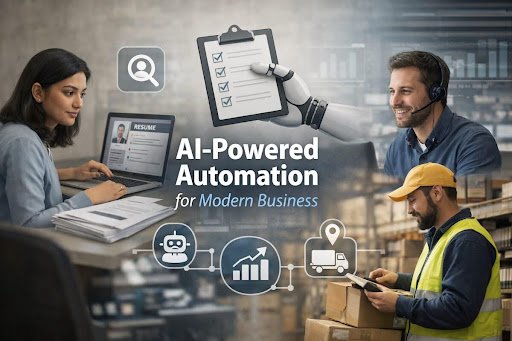
AI used to feel like a far-off concept, something only tech giants or research labs talked about. But now? It’s baked into tools, services, and everyday decisions businesses make — whether they realize it or not. Automation through AI isn’t just some shiny feature; it’s shifting how companies operate from the ground up.
This isn’t about robots taking over. It’s about software and systems helping people do more in less time, without burning out or making costly mistakes. If you run a business or are planning to scale, understanding how AI fits into automation isn’t optional anymore. It’s already happening.
Let’s break it down in a way that actually makes sense.
What Does Automation with AI Even Mean?
People throw the term around a lot, but here’s the simple version: It’s when machines or software do tasks automatically, and AI makes those systems smarter. Instead of just following rules, they can learn, adapt, and make decisions — all on their own.
Think of it like this: regular automation is like cruise control. AI-powered automation is like autopilot that adjusts speed, reacts to traffic, and even takes alternate routes when needed.
That kind of power is now in tools that help with hiring, customer support, supply chains, content creation, and just about every other part of business.
Where It’s Showing Up in Business Operations
You don’t need to overhaul your entire company to see AI in action. Here’s where it’s already doing real work:
1. Hiring & Recruitment
This one’s changed a lot. Traditional hiring involved tons of resumes, long email threads, and endless interviews. Now, AI Interview Tool platforms can screen applicants, analyze their responses, and even rank them based on how well they fit the role.
It doesn’t remove the human part — it just handles the boring bits. You still make the final call. But by cutting the fluff, businesses are saving time and getting better results.
Some tools even look at voice tone, facial expressions, and word choice to gauge a candidate’s confidence and honesty. That’s something no recruiter has time to do at scale.
2. Customer Support
Chatbots aren’t just answering FAQs anymore. They’re learning from past conversations, recognizing patterns, and knowing when to hand off a chat to a real person.
It’s not perfect, but for basic queries, AI has already cut down wait times and boosted satisfaction scores for a lot of companies.
Customers don’t always want to talk to a human. Sometimes they just want fast answers. That’s where AI shines.
3. Marketing & Content
AI tools are now writing ad copy, creating product descriptions, sending emails, and running A/B tests. That doesn’t mean marketers are out of a job. It just means they can focus more on strategy and less on cranking out content on a deadline.
You can also use AI to analyze what’s working and what’s not — way faster than a human team digging through spreadsheets.
4. Inventory & Supply Chain
AI helps predict demand, avoid stockouts, and even reroute shipments when there are delays. That’s crucial if you’re dealing with physical products.
Retailers and manufacturers are using it to reduce waste, save money, and stay ahead of issues. When one broken link in the supply chain can cause a domino effect, predictive systems make a huge difference.
Small Business? This Still Matters
You don’t need a massive tech budget to take advantage of automation. In fact, small teams often benefit the most. When you’ve got limited hands on deck, having a few smart tools doing the grunt work can free up your day.
The trick is picking the right tools for your specific needs. That could mean an AI Interview Tool if hiring is your current pain point. Or maybe customer retention is the challenge, and smart email automation can help you there.
Whatever the case, ignoring AI won’t stop your competitors from using it to get ahead.
The Human Side Isn’t Going Away
There’s a lot of fear about machines replacing people. But here’s the thing: AI can’t build trust, show empathy, or create culture. People still want to do business with people. What AI does is help humans spend more time on high-impact work.
Think of it like hiring a really fast, non-stop intern who never gets tired and handles repetitive stuff without complaining.
So instead of fighting it, more companies are leaning into AI to support their teams. It’s not about choosing between AI and humans. It’s about using both together.
What’s Happening in India’s AI Scene?
You might be surprised how big the movement is when it comes to AI development in India. The country has become a serious player in building and deploying AI tools for global clients.
Tech companies across the U.S. are already outsourcing AI-heavy projects to Indian development teams. Why? Because they bring serious skill, strong communication, and a cost edge that’s hard to beat.
More startups and enterprises are looking east to hire AI developers who can build tools from scratch, fine-tune models, or integrate AI into existing systems.
It’s not just about writing code. Developers in India are working on real-world solutions — automating healthcare processes, streamlining logistics, and even powering finance tools for U.S. markets.
If your company’s thinking about building anything AI-related, it’s worth exploring talent in that region. The growth is fast, and the quality is real.
What to Look Out for Before You Jump In
Before you start throwing AI at every problem, ask yourself a few things:
- What tasks actually take up most of your team’s time?
- Are there patterns in your business that repeat every week?
- Do you have clear goals or are you just curious about AI?
You don’t need to automate everything all at once. Start small. Test. Tweak. Expand.
The biggest mistake? Thinking automation means setting it and forgetting it. AI still needs oversight. If you’re automating without monitoring, you’re just moving faster — not smarter.
Some Final Thoughts Worth Your Time
If you’re still on the fence, here’s the short version: automation with AI is already reshaping business, whether you like it or not.
It’s not just about saving time or money (though it does that too). It’s about working better, making smarter calls, and staying ahead without burning out your team.
Start by identifying one bottleneck in your process. Could be hiring, support, or operations. Then explore how AI tools — especially ones powered by solid development from regions like AI development in india — could help solve that problem.
Whether you’re planning to hire AI developers or just try out an AI Interview Tool, you don’t have to go all in right away. Just take the first step.
The longer you wait, the further behind you fall. So what are you waiting for?