

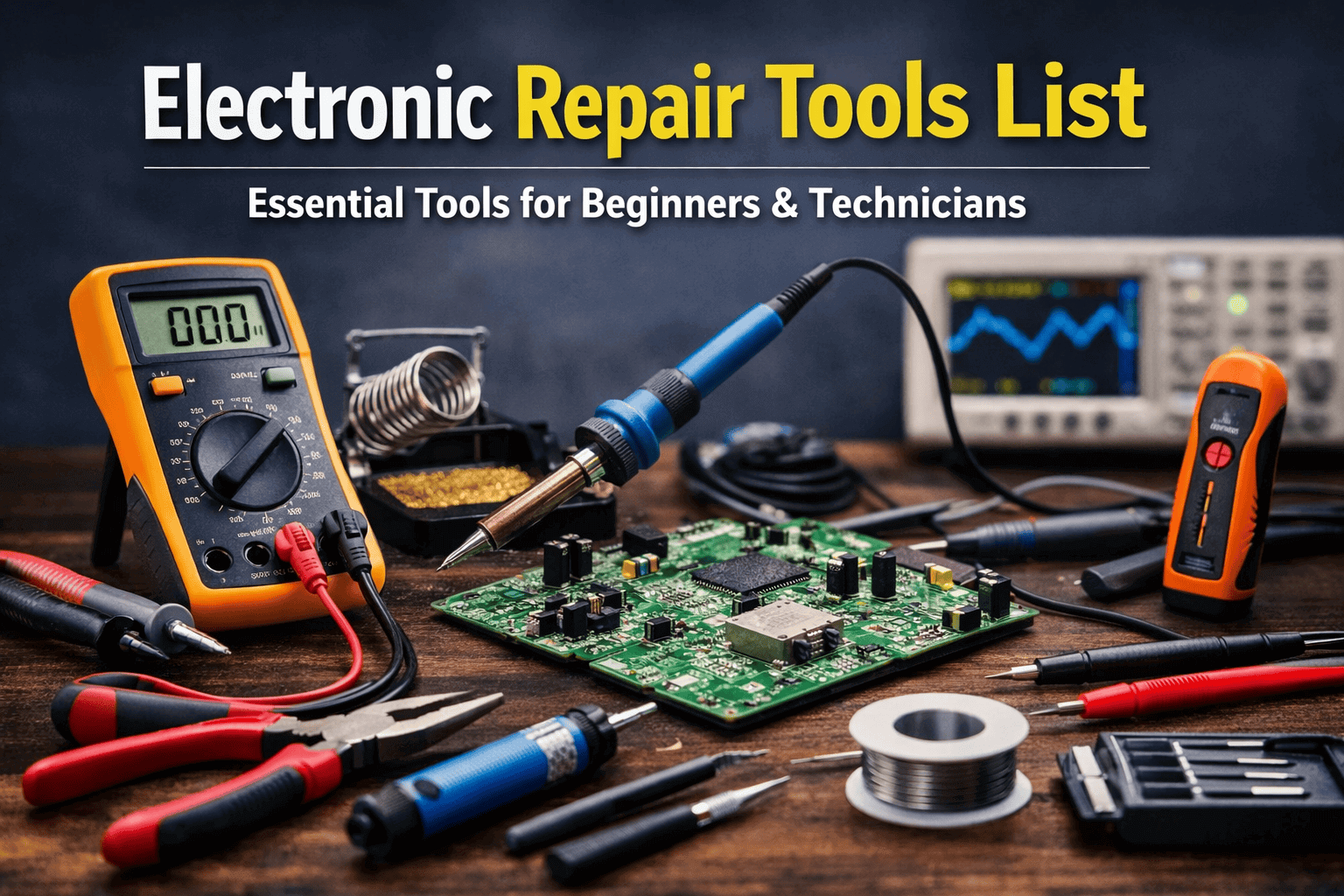
Introduction
Electronic devices are an essential part of modern life, from smartphones and laptops to home appliances and office equipment. When these devices stop working, proper repair requires not only technical knowledge but also the right set of tools. Using incorrect or low-quality tools can cause further damage and safety risks.
This guide provides a complete electronic repair tools list to help beginners, students, and professional technicians choose the correct tools for safe and effective electronic repair work.
1. Basic Electronic Repair Tools
These tools form the foundation of all electronic repair tasks and are required in almost every repair situation.
- Precision Screwdrivers: Used for opening small electronic devices such as mobile phones and laptops
- Flat and Phillips Screwdrivers: Suitable for general electronic equipment
- Needle-Nose Pliers: Helpful for gripping and bending small components
- Tweezers: Ideal for handling tiny and delicate electronic parts
- Wire Cutter and Wire Stripper: Used for cutting and preparing electrical wires
These basic tools are essential for both beginners and experienced technicians.
2. Electronic Testing Tools
Testing tools help identify faults accurately before starting any repair, saving time and effort.
- Digital Multimeter: Measures voltage, current, and resistance
- Continuity Tester: Checks broken or incomplete circuits
- Voltage Detector: Detects live electrical current
- Bench Power Supply: Provides controlled power during testing
Proper testing ensures safe and precise troubleshooting.
3. Soldering Tools for Electronics Repair
Soldering tools are critical for repairing and replacing electronic components.
- Soldering Iron: Used to attach and remove components from circuit boards
- Solder Wire: Creates strong electrical connections
- Flux: Improves solder flow and connection quality
- Desoldering Pump or Wick: Removes excess or unwanted solder
- Soldering Stand: Holds the soldering iron safely when not in use
High-quality soldering tools improve durability and repair accuracy.
4. Advanced Electronic Repair Tools
These tools are commonly used by professional technicians for complex electronic repairs.
- Hot Air Rework Station: Used for surface-mounted and IC components
- Digital Oscilloscope: Analyzes electrical signals and waveforms
- Logic Analyzer: Tests digital circuits and data signals
- Component Tester: Identifies and checks electronic components
Advanced tools increase efficiency and reduce the risk of errors.
5. Safety and Protection Tools
Safety tools protect both the technician and electronic components during repair work.
- ESD Mat and Wrist Strap: Prevent damage from static electricity
- Insulated Gloves: Protect against electrical shock
- Safety Glasses: Shield eyes from solder splashes and debris
- Heat-Resistant Work Mat: Protects work surfaces from heat damage
Safety should always be a top priority in electronics repair.
6. Electronic Repair Tools for Beginners
Beginners should start with a simple and affordable tool setup:
- Digital Multimeter
- Precision Screwdriver Set
- Basic Soldering Iron
- Tweezers and Wire Cutter
These tools can handle most basic electronic repair tasks.
7. Tips for Choosing the Right Electronic Repair Tools
- Choose durable and reliable tools for long-term use
- Avoid extremely cheap tools that may damage components
- Ergonomic designs reduce fatigue during long repair sessions
- Always prioritize safety-certified tools
Selecting the right tools improves both performance and safety.
Conclusion
Successful electronic repair depends heavily on the quality and suitability of the tools used. This electronic repair tools list serves as a practical and easy-to-follow guide for anyone interested in electronics repair. Whether you are a beginner learning the basics or a professional handling advanced repairs, the right tools will help you work efficiently, safely, and confidently.
For More Info Visit:- marketingbiznews.com
 David Martinez