

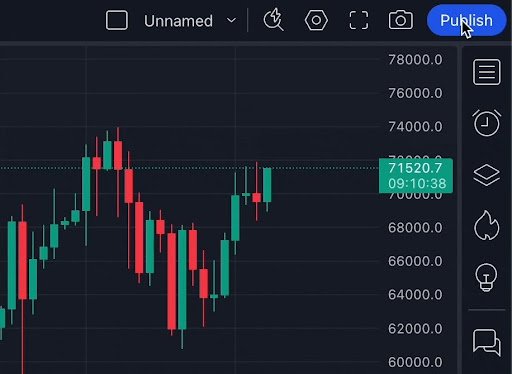
Markets with purely psychological price levels are sometimes overlooked by strictly technical analysis because those levels lack geometric origin, yet their significance is real and rooted in how the human mind processes numerical information. Clean numbers at regular intervals draw the attention of market participants simply because they align with natural cognitive patterns, and that attention makes them self-fulfilling. These levels attract concentrations of orders, stops, and decision-making activity that produce consistent price behavior across instruments and timeframes, and traders who incorporate this into their analytical framework gain access to a category of market behavior that purely mechanical analysis tends to miss.
The mechanism operates through several overlapping channels, each reinforcing predictable behavior at round numbers. Retail traders tend to place stop and take-profit orders at clean levels, EUR/USD at 1.1000 rather than 1.1017, gold at 1800 rather than 1793, the Dow at 30000 rather than 29847. That clustering of orders creates areas where price reacts not only to directional sentiment but to the mechanics of order execution at those levels. Institutional participants are well aware of retail stop clusters and can be expected to test those levels, to the point where price tests at round numbers are anticipated by informed participants and can catch less aware traders off guard.
TradingView charts allow traders to examine the historical behavior of specific round numbers, which builds conviction about their practical significance more effectively than theoretical argument. Examining the daily EUR/USD chart and observing how price has reacted at 1.0500, 1.1000, 1.1500, 1.2000, and comparable round number levels across the chart’s history produces a consistency that abstract statements about round number significance cannot convey. The evidence drawn from direct chart examination is more persuasive than any theoretical framework, because it presents actual market behavior as concrete evidence rather than a model of how the market ought to behave.
Not every round number carries equal significance, and calibrating which levels matter requires systematic review in each market. The psychological relevance of a level is partly determined by its relationship to the instrument’s typical range of movement: gold respects fifty-dollar and one-hundred-dollar increments in a manner consistent with its high absolute price level, while EUR/USD participants show greater sensitivity at the second decimal place than the third, indicating the precision at which that market’s participants anchor their decision-making. Crude oil reacts to ten-dollar and five-dollar intervals, reflecting the increments most energy market participants use as reference points. Building that instrument-specific map of significant round numbers is a research task, and the platform’s historical depth is what makes it feasible at scale.
Round numbers gain their greatest analytical utility when they land at the same price as an established technical reference. A round number sitting at a prior significant high or low, a Fibonacci retracement, or a trendline carries a different weight than one sitting in open space, because multiple participant groups are making decisions at that same price for different reasons. Overlaying those references on a single chart surfaces the levels where that convergence exists, and the combined case for a reaction at those levels is stronger than any single reference point would support on its own.
The price action patterns that emerge around round numbers on TradingView charts are a physical expression of market sentiment rather than mathematical coincidence. The levels carry no intrinsic geometric significance, but the human tendency to structure decisions around clean numbers produces real order flow concentrations that influence price behavior when those levels are approached. Traders who have learned to incorporate this systematically into their analysis add a layer of anticipatory awareness to their technical work, producing a category of trade setups that are positioned ahead of the reaction rather than in response to it.