

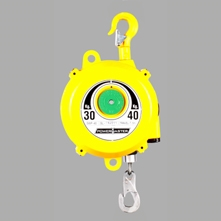
In the manufacturing industry, there is repetitive activity in terms of using tools. Frequent lifting, manipulation, and positioning of heavy tools cause muscle fatigue, loss of accuracy, and discomfort in the work environment. The right holder tool can help address these issues by ensuring that the tools are within reach without making any extra physical effort.
Industrial tool balancers have been widely applied in many industries for ergonomics, safety, and productivity reasons. They suspend tools overhead and balance their weights so that the operator can handle them with ease and less physical effort. Industries that apply tool balancers include automotive, engineering, aerospace, and assembly manufacturing industries.
What Are Tool Balancers?
A tool balancer can be defined as a mechanical system for hanging hand-held equipment by using a retractable cable and a spring balancing system. Instead of keeping the tools on the surface of the work area, the tool balancer helps keep the tools suspended within arm’s length.
The main purpose of using a tool balancer is to balance the load of the tool. It makes it easier for operators to handle tools with ease.
Some of the major benefits of tool balancers are:
- Reduces fatigue of operators
- Increases organization in the work environment
- Provides fast access to tools
- Provides precise control when operating tools
- Minimizes the risk of injuries due to tools
By improving tool handling, these systems support both employee well-being and overall production efficiency.
How Tool Balancers Improve Workplace Ergonomics
-
Reducing Physical Stress During Repetitive Tasks
In several manufacturing processes, the workers have to execute the same actions multiple times each day. Lifting and carrying heavy tools can result in stress on the wrist, shoulder, arm, and back muscles.
The use of a tool balancer helps alleviate this problem by distributing the tool’s weight through a controlled suspension. The worker uses his strength only during the process of pulling down the tool.
These balanced actions help:
- Reduce muscle fatigue
- Promote correct body posture
- Eliminate unnecessary lifting
- Ensure greater comfort for the employees
An ergonomic workplace ensures higher efficiency of the workers.
-
Improving Accuracy and Workflow Efficiency
It is critical to have precision in such fields as automotive assembly, electronics, and engineering. In case workers find it difficult to handle or position tools, accuracy becomes a problem, and the amount of time spent on the job increases.
Balancers help workers handle tools effectively since they always remain in one place.
Advantages of productivity include:
- Increased speed of performing tasks
- Efficient tool handling
- Reduction in downtime
- Work consistency
- Efficiency of workstations
How Spring Mechanisms Support Tool Balancing
The efficiency of the tool balancer is dependent on the spring mechanism inside it. Just like the spring balance, the springs inside are used to create a balancing force due to their spring force.
In the tool balancer, the spring is used to apply a controlled force that opposes the weight of the attached tool. The effect of this is to make the equipment lighter without affecting the operation process.
The effective spring mechanism ensures:
- Balancing force consistency
- Cable movement consistency
- Tool position consistency
- Tool safety
- Long life span
It is important to choose the right spring capacity for the tool balancer since it should correspond to the weight of the tools used.
Safety Features and Technical Considerations
An industrial workplace needs equipment that is suitable for working throughout. There are certain considerations when purchasing high-quality tool balancers.
Some considerations to make are:
-
Load Capacity
The tool balancer should be able to hold the precise weight limit of the tool. Good load balancing helps the smooth movement and prevents the tool from being under any pressure.
-
Cable Length and Working Range
The stroke of the cable is what determines the extent to which the tool can move from the hanging position. A good choice of stroke allows good movement.
-
Safety Features
Good balancers have safety features like a secure mount and a proper retracting mechanism to prevent accidents from falling tools.
-
Durability
For industrial settings, robust construction materials that can endure constant usage, dust, and constant motion are required.
Applications of Tool Balancers Across Industries
Tool balancers can be found in several industries where workers frequently use handheld machinery.
The uses may be categorized as follows:
- Automotive assembly operations
- Manufacturing production lines
- Aerospace components assembly
- Machine workshops
- Maintenance and repair workshops
- Electric and mechanical assembly
They can be used with pneumatic tools, electric screwdrivers, welding tools, and handheld machines.
Choosing the Right Tool Balancer for Your Workplace
Correct selection of the right tool balancer enhances both efficiency and comfort for employees. Companies must consider their needs when selecting a system.
Key considerations are:
- Weight and capacity of tools to be balanced
- Frequency of use of tools
- Working distances needed
- Conditions at the workplace
- Safety considerations
- Maintenance considerations
The right tool balancer ensures smoother operation and higher workplace performance.
Conclusion
The tool balancer is an important component that should be considered by any modern industry that seeks better ergonomics and productivity in the workplace. This can be achieved through minimizing physical stress, better access to the tools, and better workflow.
With state-of-the-art technology, high-quality designs, and industrial solutions, Spring Balancers help firms manage their tools efficiently. The tools from Spring Balancers are designed to ensure smoother operations, increase worker comfort, and increase efficiency in various industrial settings.
 David Martinez