

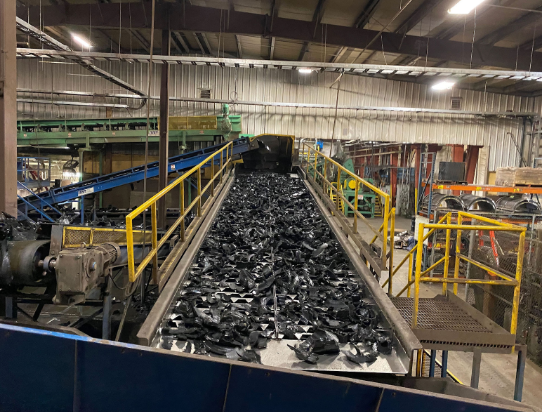
Rubber waste has emerged as a serious environmental concern due to rising vehicle ownership and limited disposal options. Millions of used tyres are discarded annually, creating long-lasting pollution risks because rubber does not biodegrade easily. When stockpiled or landfilled, tyres become breeding grounds for pests and present major fire hazards. Tyre recycling offers a structured approach to managing this waste by converting end-of-life tyres into reusable materials. By integrating recovery technologies with responsible waste management practices, industries and municipalities can significantly reduce environmental damage while extracting economic value from discarded rubber resources.
Understanding the Scale of Rubber Waste
The global accumulation of used tyres continues to grow as transportation and logistics expand across industries. Disposed tyres occupy large volumes in landfills and often resurface due to their shape and trapped air, causing structural instability at disposal sites. When unmanaged, rubber waste can contaminate soil and waterways through leaching of harmful chemicals. In this context, tyre recycling plays a vital role by diverting waste away from landfills and into controlled processing systems. Addressing the scale of the problem requires infrastructure that can handle high volumes while meeting environmental compliance standards.
Environmental Risks of Improper Tyre Disposal
Improperly discarded tyres pose significant environmental and public safety risks. Tyre fires are particularly dangerous, as they burn for long periods and release toxic smoke containing heavy metals and carcinogens. Water trapped in abandoned tyres also becomes a breeding site for disease-carrying mosquitoes. Through tyre recycling, these risks are mitigated by breaking down tyres into components that can be safely reused or repurposed. Controlled recycling processes prevent uncontrolled combustion and reduce the release of hazardous substances into the environment.
How Tyre Recycling Creates Sustainable Value
Modern recycling systems transform waste tyres into materials such as crumb rubber, steel, and textile fibres. These recovered materials are widely used in road construction, sports surfaces, moulded products, and energy recovery applications. By reintegrating rubber into industrial supply chains, tyre recycling supports circular economy principles and reduces reliance on virgin raw materials. This approach not only conserves natural resources but also lowers the overall carbon footprint associated with rubber production and disposal.
Industrial and Municipal Benefits of Recycling Systems
For industries and local governments, investing in tyre recycling infrastructure delivers long-term operational and environmental benefits. Recycling reduces landfill dependency, lowers waste transportation costs, and supports regulatory compliance. Municipalities can incorporate recycled rubber into public infrastructure projects, while industries benefit from consistent access to secondary raw materials. Implementing tyre recycling solutions also demonstrates corporate and civic commitment to sustainability, which is increasingly important for regulatory approval and public trust, attracting green investment, creating local jobs, strengthening circular economies, and enhancing community resilience over time.
Technological Advances Supporting Long-Term Solutions
Advancements in shredding, separation, and material recovery technologies have improved the efficiency and safety of tyre recycling operations. Automated systems now enable higher throughput with reduced energy consumption and minimal environmental impact. These innovations make recycling a scalable and economically viable solution for long-term rubber waste management. As processing technologies continue to evolve, tyre recycling will remain central to reducing waste accumulation while supporting sustainable industrial practices.
Conclusion
Managing rubber waste requires solutions that are both environmentally responsible and operationally efficient. Recycling systems provide a structured pathway to reduce landfill pressure, recover valuable materials, and minimise pollution risks. When integrated with broader waste management strategies, these systems strengthen sustainability outcomes across industries and municipalities. Supporting infrastructure, such as compactors, further enhances efficiency by optimising material handling and storage. This ensures that recycling operations remain viable and effective over the long term.
 David Martinez