

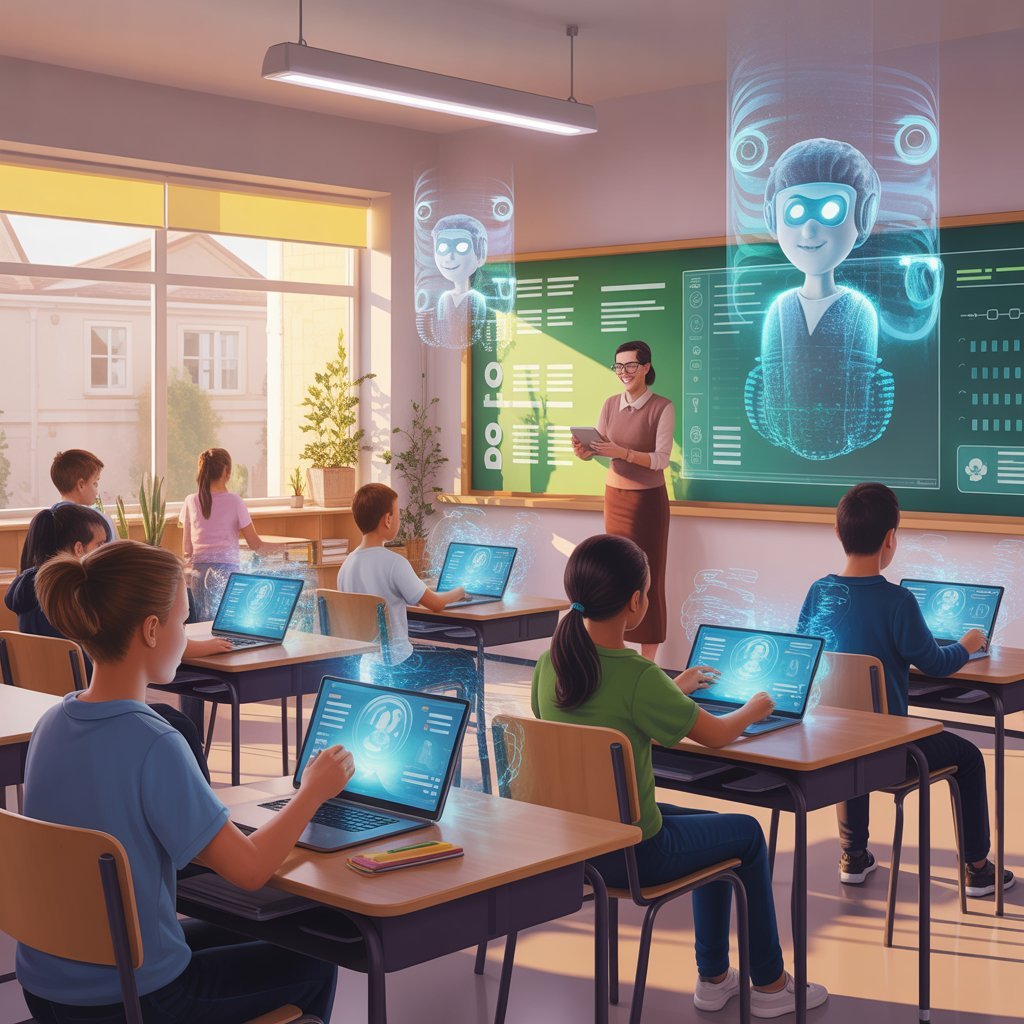
What Is AI in Education? A Simple Explanation
Artificial Intelligence (AI) in education means using smart technologies—like machine learning, chatbots, and intelligent software—to help students learn better and help teachers teach more efficiently.
AI does not replace teachers. Instead, it supports them by personalizing lessons, automating repetitive tasks, and giving students quick help whenever they need it.
Today, AI is becoming a major part of modern classrooms, online learning platforms, and educational apps.
How AI Works in Education
AI works by studying student data—such as speed, accuracy, learning style, and performance—and then adjusting the content based on the student’s needs.
For example:
- If a student struggles with math, AI gives easier questions and step-by-step explanations.
- If a student understands quickly, AI gives advanced problems.
This makes learning personalized, something that is difficult to achieve in traditional classrooms.
Real Examples of AI in Education
1. Personalized Learning Tools
Platforms use AI to give customized lessons, practice questions, and study plans for each student.
2. Smart AI Tutors
These tools answer doubts, explain concepts, and help with homework 24/7.
3. Automated Grading Systems
AI can check quizzes, multiple-choice tests, and even essays—saving teachers a lot of time.
4. AI-Powered Educational Apps
Apps like Duolingo, Photomath, Khan Academy, and ChatGPT help students learn languages, solve math problems, and understand tough concepts.
5. Virtual Classrooms & Smart Assistants
AI helps take attendance, create study materials, and generate lesson plans for teachers.
Benefits of AI in Education
1. Personalized Learning for Every Student
Each student learns differently. AI makes study plans based on individual strengths and weaknesses.
2. Instant Feedback & Support
No need to wait for a teacher. AI tutors give answers instantly.
3. Saves Time for Teachers
Grading, attendance, and administrative tasks are done automatically.
4. More Engaging Learning
Interactive lessons, videos, quizzes, and games keep students motivated.
5. Better Accessibility
AI tools help students with disabilities using:
- Speech-to-text
- Text-to-speech
- Audio explanations
- Language translation
Challenges of AI in Education
Even though AI is helpful, it also brings challenges:
High Cost of Implementation
Schools need devices, internet, and skilled staff.
Data Privacy Concerns
AI collects data, so schools must ensure safety and privacy.
Over-dependence on Technology
Students might rely too much on AI instead of thinking on their own.
Teacher Training Needed
Teachers need proper training to use AI tools effectively.
Future of AI in Education
The future of AI in learning is exciting. We may soon see:
- Smart classrooms that adapt to each student
- Virtual teachers for basic queries
- AI-generated textbooks and study notes
- Fully personalized courses
- Real-time learning analytics for teachers
AI will not replace teachers—but it will become their strongest assistant.
Conclusion
AI in education is transforming the way students learn and teachers teach.
It offers personalized lessons, faster support, automation, and greater accessibility.
While there are challenges, the benefits show that AI will play a huge role in the future of learning.
Artificial intelligence is not just a trend—it’s a powerful tool that can make education smarter, simpler, and more effective for everyone.
For More Info Visit:- marketingbiznews.com
 Kathie
  David Martinez