

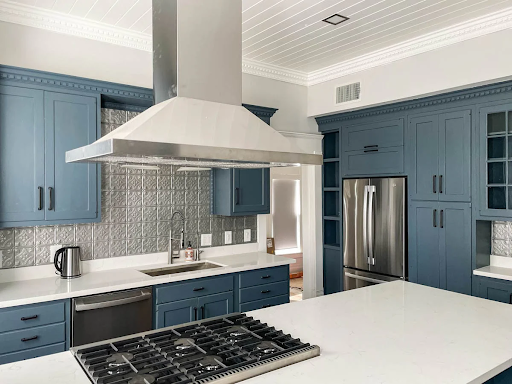
Modern kitchens are designed to be more open, social, and functional than ever before. In many homes across the United States, kitchen islands have become central gathering spaces where cooking, dining, and entertaining happen together. In the middle of this design trend, kitchen island ventilation hoods play a major role in maintaining a clean and comfortable environment. Cooking releases smoke, grease particles, moisture, and airborne contaminants into the air. Without proper ventilation, these pollutants can linger in the kitchen, spread to nearby rooms, and reduce overall indoor air quality. Effective ventilation systems help remove these contaminants while also supporting a healthier and more enjoyable cooking experience.
Why Proper Kitchen Ventilation Matters
Kitchen island ventilation hoods are specifically designed to remove airborne grease, odors, and heat generated during cooking. Unlike wall-mounted systems, island hoods are suspended above cooking surfaces located in open kitchen layouts, making them especially important for airflow control. Indoor cooking can produce pollutants such as carbon monoxide, nitrogen dioxide, and fine particulate matter. Gas stoves in particular may contribute to indoor air concerns when ventilation is insufficient. According to research from organizations focused on indoor environmental quality, proper kitchen exhaust systems help reduce exposure to these pollutants and improve household comfort. Ventilation also helps regulate humidity levels. Excess moisture from boiling, steaming, or simmering can contribute to condensation buildup and long-term issues such as mold growth. A properly sized hood system helps remove steam before it spreads throughout the home.
Features That Improve Ventilation Performance
When evaluating kitchen island ventilation hoods, airflow capacity is one of the most important considerations. Airflow is typically measured in cubic feet per minute (CFM), which indicates how much air the system can move. Higher-powered cooking appliances often require stronger ventilation systems. For example, frequent frying, grilling, or high-heat cooking may need higher CFM ratings to effectively remove smoke and grease from the air. Another important feature is filtration. Many ventilation systems include stainless steel baffle filters or mesh filters that capture grease particles before they enter the ductwork. Quality filters help maintain cleaner air while also reducing buildup inside the ventilation system itself. Noise level is another factor homeowners often consider. Modern systems increasingly focus on balancing strong airflow with quieter operation, especially in open-concept homes where kitchen noise can affect nearby living spaces.
The Role of Ventilation in Open-Concept Kitchens
Open-concept floor plans remain highly popular because they create a larger and more connected living area. However, they also allow cooking odors and smoke to spread more easily through the home. This is where kitchen island ventilation hoods become especially valuable. Since island cooktops are exposed on all sides, ventilation systems must work efficiently to capture airborne particles before they disperse into adjacent rooms. Proper hood sizing also matters. Industry recommendations often suggest selecting a hood that extends slightly beyond the width of the cooktop to improve smoke capture efficiency. Placement height is equally important because it affects how effectively the system captures rising heat and contaminants. Good ventilation not only improves air quality but also helps preserve furniture, walls, and ceilings by minimizing grease accumulation over time.
Maintaining Ventilation Systems for Long-Term Performance
Routine maintenance is essential for keeping ventilation systems operating efficiently. Grease filters should be cleaned regularly to prevent buildup that can reduce airflow performance. Duct inspections may also help identify obstructions or accumulated residue over time. Proper maintenance supports better indoor air quality while also extending the lifespan of the ventilation system. Homeowners who cook frequently may need to clean filters more often, depending on cooking habits and grease production levels.
Conclusion
Well-designed ventilation systems contribute significantly to cleaner indoor air, improved comfort, and better cooking experiences in modern homes. Outdoor cooking areas may also benefit from specialized ventilation solutions, such as a BBQ grill hood. As kitchen layouts continue to evolve, proper airflow management remains an important part of maintaining both functionality and indoor air quality.
 Sally
Sally