

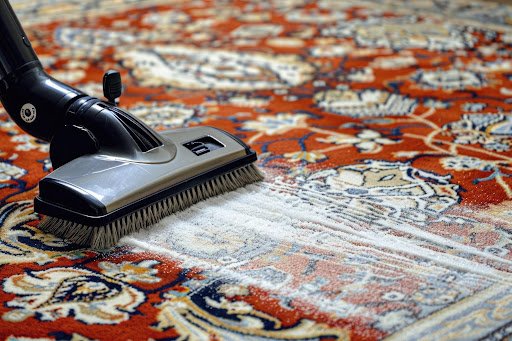
Dubai doesn’t play fair when it comes to rugs. Between the desert dust that finds its way through window seals, the sudden humidity spikes off the coast, and air-conditioning systems running non-stop for months, rugs here take a beating that most cleaning guides written for milder climates simply don’t account for. If you’ve ever pulled back a rug and found a musty smell, a dulled pile, or a fine grey layer of grit no matter how often you vacuum, you’re not doing anything wrong; you’re just dealing with conditions that call for a different playbook. This is exactly why residents and businesses across the city increasingly turn to the best commercial rug cleaner they can find rather than relying on standard home methods that weren’t built for this environment.
Why Dubai’s Climate Is Uniquely Hard on Rugs
Two forces work against your rugs simultaneously here, and understanding both is the first step to actually solving the problem.
Dust infiltration is constant: Dubai sits on the edge of a desert, and fine sand particles are practically airborne year-round. These particles are abrasive at a microscopic level; every time someone walks across a dusty rug, those grains act like sandpaper against the fibres, wearing them down from the inside out, not just dulling the surface colour.
Humidity swings, meanwhile, create the opposite problem: Coastal humidity combined with heavy AC use means rugs experience constant micro-cycles of dampness and drying. That moisture gets trapped in the pile and backing, especially in rugs sitting directly on tile or marble flooring with poor airflow underneath. Trapped moisture is the single biggest trigger for mould, mildew, and that musty odour that regular vacuuming never seems to fix.
Put those two together, and you get rugs that look dirty faster, wear out faster, and develop hidden hygiene issues that surface cleaning can’t reach.
Everyday Habits That Actually Help
Before we get into deep cleaning, a few daily and weekly habits make a measurable difference:
- Vacuum more often than you think you need to. In Dubai, twice-weekly vacuuming isn’t overkill, it’s basic maintenance. Use a vacuum with strong suction and, if possible, a HEPA filter to actually capture fine dust instead of just recirculating it.
- Rotate rugs periodically. This evens out sun fading and foot-traffic wear, especially near entryways and windows.
- Use entry mats aggressively. A huge percentage of the dust and sand that ends up embedded in rugs comes in on shoes. A good mat at every entrance intercepts most of it before it ever reaches your rug.
- Keep air circulating underneath. Rug pads with breathable, moisture-resistant backing prevent the trapped-humidity problem far better than rugs laid flat against tile.
These habits slow the damage, but they don’t reverse it. That’s where proper deep cleaning comes in.
Why Deep Cleaning Needs to Be Different Here
Standard shampooing methods designed for temperate climates often use more water and longer drying windows than Dubai’s humidity can handle. If a rug doesn’t dry fully and quickly after a wash, you’ve essentially recreated the same moisture-trapping problem you were trying to solve, just with a wetter starting point.
This is precisely why proper rug shampooing in Dubai requires climate-adapted techniques, controlled water volume, fast extraction, and accelerated drying using airflow and humidity control rather than just letting the rug sit and hope for the best. Dust embedded deep in rug fibres also doesn’t respond well to surface cleaning alone. It needs agitation methods that lift particles out from the base of the pile, followed by thorough rinsing so the grit doesn’t just get redistributed and reset into the fibres once the rug dries.
What Professional Cleaning Actually Solves
A proper deep clean isn’t just about looking fresher; it addresses issues home cleaning genuinely can’t reach:
- Embedded grit removal: Professional-grade extraction pulls dust and sand out from the base of the pile, not just the surface, preventing the long-term fibre abrasion that dulls colour and shortens a rug’s lifespan.
- Moisture control during and after washing: Controlled drying using industrial airflow prevents the mould and mildew growth that’s almost guaranteed with slow, ambient drying in a humid environment.
- Odour elimination at the source: Musty smells usually come from bacteria growing in trapped moisture, not just surface dirt. Proper sanitising during the wash addresses the actual cause rather than masking it with fragrance.
- Fibre and colour preservation: Using pH-balanced solutions suited to the rug’s material, wool, silk, synthetic blends, protects both the structure and the dye, something generic store-bought shampoos aren’t formulated to guarantee.
For businesses running rugs across lobbies, offices, hotels, or retail floors, this matters even more. High foot traffic combines with the same climate stress, and a facility can’t afford weeks of drying downtime or the reputational hit of a rug that smells musty in a client-facing space.
The Bottom Line
Rugs in Dubai face a genuinely tougher environment than most cleaning advice accounts for, and treating them like they’re in a mild, dry climate is a fast track to premature wear, trapped moisture, and hidden odour problems. Good daily habits buy you time, but periodic deep cleaning from a provider who actually understands local conditions is what protects your investment long-term. Selecting the best commercial rug cleaner for the job, one who factors in both the dust and the humidity, not just one or the other, is what separates a rug that lasts for years from one that needs replacing far sooner than it should.
This is where working with a team that understands Dubai’s specific conditions, not just generic cleaning theory, makes the real difference. MoonLightCarpet builds its rug cleaning process around exactly these local challenges: controlled washing, rapid climate-appropriate drying, and material-specific treatment that protects both hygiene and fibre integrity in a way that’s tailored to the city’s dust and humidity, not borrowed from a manual written somewhere else entirely.