

Traditional handmade products often bring together cultural heritage, artistic skill, and everyday usefulness. In Nepal and the wider Himalayan region, metalwork, textiles, spiritual accessories, and decorative crafts reflect generations of knowledge passed between artisans. Among these products, singing bowls have become especially recognised for their distinctive tones and their connection with meditation and mindfulness.
A tibetan singing bowls set can introduce beginners to the experience of working with sound, while a carefully selected nepal singing bowl can also serve as a meaningful object for experienced practitioners and collectors. Understanding the craftsmanship behind these instruments helps buyers appreciate their individual qualities and choose products suited to their needs.
What Are Tibetan Singing Bowls?
Tibetan singing bowls are metal instruments traditionally associated with Himalayan cultural and spiritual practices. They produce resonant tones when gently struck or when a mallet is moved around the rim.
The sound can vary depending on the bowl’s size, shape, thickness, material composition, and construction. Some bowls produce deep, layered tones, while others create brighter sounds with different patterns of resonance.
Singing bowls are commonly used during meditation, yoga, mindfulness exercises, and sound-based relaxation practices. They can also be displayed as decorative or cultural objects.
Although they are sometimes marketed using wellness terminology, singing bowls should be understood primarily as traditional instruments and tools for personal practice. They are not medical devices and should not be presented as treatments for illness.
How Singing Bowls Are Made
Handcrafted singing bowls require experience, patience, and technical skill. Traditional metalworking methods may involve heating, shaping, hammering, and finishing the metal to create the bowl’s form.
The artisan must pay attention to the shape and thickness because these factors influence the way the bowl vibrates and sounds. Repeated hammering and finishing work also contribute to its surface appearance.
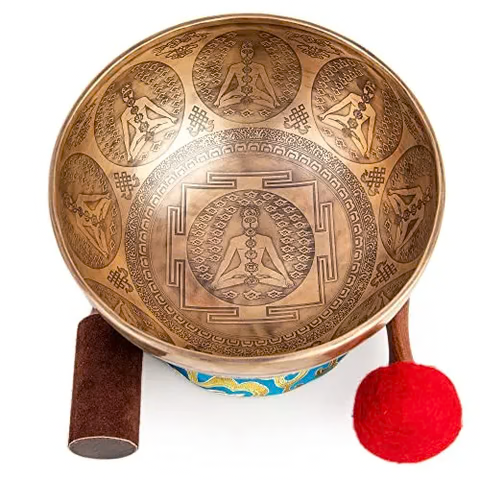
Some bowls feature engraved or etched designs, including Buddhist symbols, mantras, floral patterns, or other decorative motifs. These details can make a bowl visually distinctive while reflecting the cultural influences associated with the region.
Because handmade production involves individual work, two bowls of similar dimensions may not sound exactly alike. This variation is one reason many buyers prefer to listen to sound samples or examine a specific instrument before purchasing.
Choosing a Tibetan Singing Bowls Set
A complete tibetan singing bowls set generally includes the bowl and accessories required for playing it. Depending on the product, these may include a cushion and a mallet.
The cushion supports the bowl and helps it remain stable while being played. The mallet is used to strike the bowl or create a sustained tone through movement around the rim.
When choosing a set, consider the following factors:
- Bowl size: Smaller bowls may be convenient for personal use, while larger bowls can produce deeper tones.
- Sound quality: Listen to available samples and consider the tone and resonance you prefer.
- Material and construction: Review the product information and ask about the manufacturing method.
- Accessories: Check whether the set includes a cushion, mallet, and storage pouch.
- Finish and design: Choose between plain, antique-style, engraved, or decorative options.
- Intended use: Consider whether the bowl is for individual meditation, a yoga studio, sound sessions, or display.
A complete set can be particularly useful for beginners because it provides the basic accessories needed to start practising.
Why a Nepal Singing Bowl Is Distinctive
Nepal has a strong association with Himalayan metalcraft and the production of traditional spiritual instruments. Skilled Nepalese artisans create bowls using techniques that combine practical knowledge with artistic attention.
A nepal singing bowl may display visible hammer marks, decorative patterns, and individual surface characteristics. These features can reflect the handmade production process.
Buyers interested in authentic products should ask about the bowl’s origin and production method. A genuine handmade instrument should be supported by clear product information rather than vague claims about tradition or authenticity.
It is also worth remembering that the term Tibetan singing bowl is commonly used for bowls associated with the wider Himalayan tradition, including products made by Nepalese artisans. The exact origin and maker should be checked through the supplier’s information.
Using Singing Bowls in Everyday Practice
A singing bowl can become part of a simple daily mindfulness routine. The user may begin by sitting comfortably, taking a few steady breaths, and gently striking the bowl.
Listening to the sound as it fades can help create a moment of attention and stillness. Some practitioners prefer to use the mallet around the rim to produce a continuous tone.
Beginners should practise slowly and avoid striking the bowl too forcefully. A stable cushion and suitable mallet can make the process easier.
Singing bowls may also be used in group meditation, yoga sessions, and personal reflection. The appropriate size and sound depend on the setting and the preferences of the person using the instrument.
The Wider World of Handcrafted Nepalese Products
Singing bowls are only one part of Nepal’s diverse handmade product tradition. The region is known for a range of cultural and decorative goods, including prayer flags, statues, jewellery, home décor, and meditation accessories.
These handcrafted Nepalese products can appeal to customers who value artisan-made objects and traditional design. Each category has its own materials, methods, and cultural context.
Prayer flags, for example, feature printed mantras and symbolic colours. Handmade jewellery may use metalwork and decorative techniques, while home décor can incorporate traditional motifs and locally crafted materials.
For retailers, combining several categories can create a more complete Himalayan-inspired product assortment. A meditation shop might stock singing bowls alongside prayer flags, cushions, and ritual accessories. A gift shop may combine small decorative pieces with handmade stationery or jewellery.
How to Evaluate an Artisan Product Supplier
Choosing a supplier requires attention to authenticity, product consistency, communication, and shipping. Buyers should request clear product specifications and ask questions about materials, manufacturing location, and available designs.
For singing bowls, sound samples are especially useful. Retailers should also check the accessories included in each set, the bowl’s dimensions, packaging, and the supplier’s process for handling damaged goods.
For other handmade products, examine material descriptions, construction quality, and design details. When purchasing in bulk, confirm the expected variation between individual handmade pieces.
Ethical sourcing is another consideration. Businesses can ask whether products are sourced directly from artisans and how suppliers support the communities involved in production. Clear answers help buyers understand the story behind the merchandise.
Final Words
Himalayan Bazaar presents a collection of handmade Nepalese and Tibetan-inspired products, including singing bowls, prayer flags, ritual accessories, and decorative items. Its product information highlights Nepalese artisan production and the cultural heritage associated with its collections.
The store offers different singing bowl designs and sets, including options supplied with cushions and mallets. Buyers can compare the available sizes, finishes, and accessories before selecting an instrument.
For retailers and individuals seeking distinctive handmade goods, a carefully chosen tibetan singing bowls set can be both a useful instrument and a meaningful cultural object. A nepal singing bowl also represents the metalworking knowledge and artistry of Himalayan makers.
Exploring handcrafted Nepalese products is an opportunity to appreciate the people and traditions behind each object. By choosing thoughtfully and learning about the craftsmanship involved, buyers can support a deeper connection with the cultural heritage of Nepal and the Himalayas.