

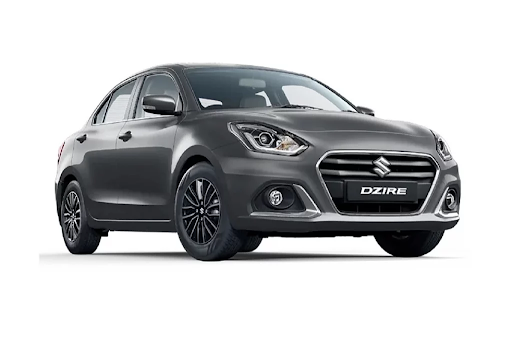
The Swift Dzire CNG price makes sense only when viewed alongside the fuel savings and the trade-offs of choosing factory CNG. The current Dzire also carries a stronger standard safety package than older versions, while the CNG option is aimed squarely at high-running buyers who can refuel conveniently. Compare the CNG premium against your likely kilometres, not against a theoretical maximum saving.
Key figures at a glance
| Variant / specification | Current reference |
| Dzire LXi petrol | Rs. 6.31 lakh |
| Dzire VXi petrol | Rs. 7.27 lakh |
| Dzire ZXi CNG | Rs. 9.19 lakh |
| Engine | 1197 cc |
| Transmission on CNG | Manual |
| Safety | 6 airbags standard |
Where the CNG variant sits
The current Dzire line starts with petrol variants, while the ZXi CNG sits higher in the range at about Rs. 9.19 lakh ex-showroom. That means the buyer pays for both a higher trim level and the factory-CNG system. Compare it with the petrol variant you would realistically buy, not only with the cheapest Dzire.
The CNG choice becomes more convincing as annual running rises. For a low-mileage household, convenience and luggage flexibility may outweigh the theoretical fuel saving.
How to calculate the CNG payback
Estimate annual kilometres, expected petrol and CNG prices, and realistic mileage for your routes. Multiply each fuel cost per kilometre by annual distance. The difference gives an approximate yearly saving. Divide the extra purchase price by that saving to estimate how long it may take to recover the premium.
What the specification tells you
The maruti swift dzire specification uses a 1197 cc engine, and the current CNG version is paired with a manual gearbox. Six airbags are standard across the range. Buyers moving from an older small sedan should also notice the newer safety and convenience package rather than judging only the engine size.
CNG ownership has practical trade-offs
Factory CNG is convenient and professionally integrated, but refuelling queues and station density vary by city. Boot space can also be affected depending on cylinder packaging. If you travel frequently on routes with weak CNG coverage, the fuel saving may not compensate for the inconvenience.
Who should choose it
The Dzire CNG makes the strongest case for drivers with regular daily use, predictable CNG access and a plan to keep the car long enough to recover the higher purchase price. Lower-mileage owners may find petrol simpler and financially close once the upfront premium is considered.
Do the payback calculation with your city prices
Petrol and CNG prices differ across Indian cities, so a national average can mislead. Note the current pump prices near your home, estimate realistic mileage in your traffic and calculate cost per kilometre. Multiply the gap by your annual distance. This produces a personalised yearly saving and a more credible estimate of how long the CNG price premium may take to recover.
Manual-only CNG changes the decision
Drivers who strongly prefer an automatic should not ignore that preference simply to chase lower fuel cost. Daily clutch use in heavy traffic can influence comfort far more than a small running-cost advantage. Compare the petrol automatic you would actually buy against the CNG manual, then decide whether fuel savings compensate for the change in driving experience.
Insurance and finance also affect payback
A higher ex-showroom amount can mean a slightly higher insurance premium and larger financed principal. Include both when comparing CNG with petrol. If the purchase premium is funded over several years, interest lengthens the true payback period. A cash-price comparison alone can therefore overstate how quickly savings arrive.
Check the CNG version’s everyday range
Fuel economy is only one part of convenience. Look at the usable CNG capacity, your regular daily distance and the number of stations on the route. A high-efficiency figure is less helpful if you need frequent detours or spend extra time queuing. Also remember that dual-fuel cars can run on petrol when CNG is unavailable, but doing so changes the running-cost calculation. Building a realistic weekly refuelling plan can tell you whether the Dzire CNG is genuinely convenient or merely cheaper on paper.
A useful final check is to compare one month of your normal driving rather than an annual average alone. Include office travel, school runs, weekend errands and one longer trip. This exposes whether CNG station access fits your real routine and whether the manual gearbox is acceptable every day.
A realistic Dzire CNG ownership test
Take one normal month of driving and estimate kilometres for work, school runs, errands and weekend trips. Calculate how many CNG fills that would require and whether the stations you use are on the route rather than a detour. Then compare the CNG manual with the petrol version you would genuinely choose, including insurance and loan interest on the higher purchase amount. This converts the Swift Dzire CNG price from a showroom number into a practical payback estimate. If the savings arrive quickly without adding inconvenience, the CNG version has a strong case; otherwise petrol may be simpler.
Conclusion
The Dzire CNG works best for buyers who drive enough to recover its higher upfront cost and have easy access to CNG. Compare it with the petrol variant you would truly purchase, not the base model. A realistic payback calculation turns the price difference into a clear decision.